Lost in the Magic of Agaña: Where Guam’s Soul Comes Alive
Stepping into Agaña, the quiet heart of Guam, feels like uncovering a secret most travelers miss. This isn’t just a capital city—it’s a living blend of Chamorro heritage, Spanish echoes, and Pacific rhythm. I wandered its streets, tasted its stories, and felt its pulse in ways I never expected. From hidden cultural corners to authentic local encounters, Agaña offers a deeper kind of island adventure—one that goes far beyond the beach. It invites you not to take pictures, but to pause, listen, and remember what travel once meant: connection, discovery, and the quiet joy of being present in a place that moves at the pace of its people.
The Quiet Pulse of a Forgotten Capital
Agaña, officially known as Hagåtña since 1998, remains Guam’s political and cultural nucleus, yet it often fades into the background for visitors drawn to the high-rises and beaches of Tumon. While Tumon buzzes with international hotels, duty-free shopping, and sunset cruises, Agaña moves differently—slower, softer, and with a quiet dignity that rewards those who take the time to notice. Its streets are narrow, its buildings low and weathered by salt and sun, and its sidewalks carry the footprints of generations rather than the hurried steps of tourists. This is not a city built for spectacle, but one shaped by memory, resilience, and daily life.
Despite its modest size—less than two square miles—Agaña holds the weight of history in its corners. It has been a gathering place for the Chamorro people for centuries, long before foreign sails appeared on the horizon. Today, it serves as the seat of Guam’s government, home to the Governor’s complex, the Legislature, and key cultural institutions. Yet its significance goes beyond administrative function. Agaña is where Guam remembers itself. The city’s rhythm is set not by tour buses or check-in times, but by church bells, market hours, and the tide’s gentle pull just beyond the coastal road.
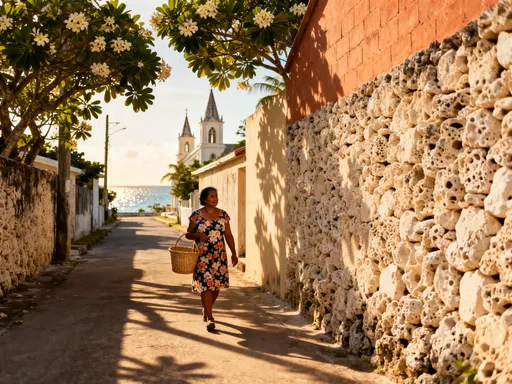
Many travelers pass through without stopping, mistaking its unassuming nature for lack of interest. But that very oversight is what preserves its authenticity. There are no souvenir stands shouting for attention, no crowds jostling for photo ops. Instead, there is a sense of calm continuity—children walking to school in crisp uniforms, elders sipping coffee on shaded porches, vendors arranging fresh flowers outside family-run shops. In a world where destinations are increasingly shaped by tourism, Agaña remains refreshingly uncurated, a place where life unfolds not for an audience, but for itself.
Walking Through Layers of History
To walk through Agaña is to step through time. Every building, plaza, and street corner carries traces of the island’s complex past—layers of influence that have shaped, but never erased, the enduring spirit of the Chamorro people. The earliest layer belongs to the indigenous Chamorro civilization, whose ancestors arrived in Guam over 3,500 years ago, building villages, navigating by stars, and living in harmony with the land and sea. Though few physical remnants remain in the city center, their presence is felt in place names, traditions, and the deep respect for family and community that still defines daily life.
The next layer emerged in 1565, when Spain claimed Guam and began over three centuries of colonial rule. This era left the most visible architectural mark. At the heart of Agaña stands the Dulce Nombre de Maria Cathedral Basilica, a striking white structure with twin bell towers that rise above the skyline. Originally built in the 17th century, the cathedral has been rebuilt and restored multiple times due to wars, typhoons, and earthquakes, yet it has always returned—a symbol of both faith and endurance. Inside, the cool air carries the scent of incense, and the stained-glass windows tell stories of saints and sacrifice, but also of survival.
Adjacent to the cathedral is the Plaza de España, once the center of Spanish governance in the Marianas. Though much of the original complex was destroyed during World War II, the reconstructed courtyard and remaining arches offer a glimpse into the past. A small museum on-site displays artifacts from the Spanish and American periods, including maps, uniforms, and personal items from early colonial families. What makes this history meaningful is not its grandeur, but its continuity. The plaza is not a museum exhibit frozen in time—it is a living space where locals gather on weekends, children play under palm trees, and elders share stories on shaded benches.
The American period, beginning in 1898, added another dimension. English became widely spoken, U.S. institutions were introduced, and modern infrastructure developed. Yet Agaña never became fully Americanized. Instead, it absorbed these influences while holding fast to its identity. Street signs are bilingual—Chamorro and English—and public events often begin with traditional chants alongside the national anthem. This blending of cultures is not seamless, nor is it without tension, but it is real, ongoing, and deeply rooted in the community’s desire to honor all parts of its story.
A Taste of Real Guam: Local Food Culture
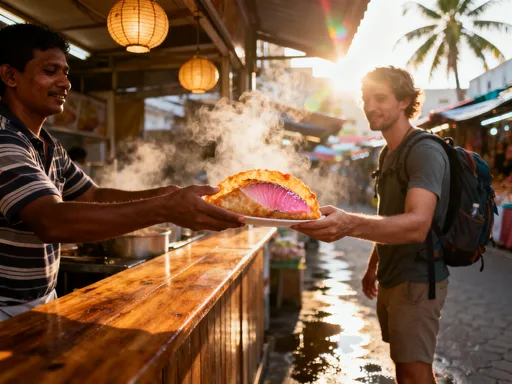
If Agaña has a soul, it is most clearly felt in its food. This is not a city of fine dining or celebrity chefs, but of home kitchens, backyard grills, and open-air markets where flavor speaks louder than presentation. To eat here is to taste the island’s history—Spanish, Filipino, American, and, above all, Chamorro. Breakfast might begin with a warm titiya, a soft flatbread made from flour, butter, and sometimes coconut, cooked on a griddle until golden. It’s simple, comforting, and often shared with family at the start of the day.
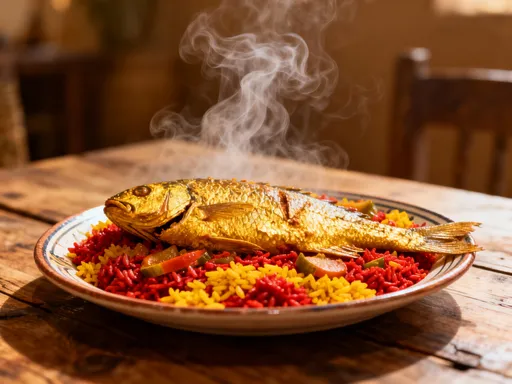
Lunch might feature kelaguen, a dish that captures the island’s resourcefulness and bold flavors. Traditionally made with grilled meat—often chicken or shrimp—finely chopped and mixed with lemon juice, grated coconut, and hot peppers, kelaguen is both tangy and spicy, a reflection of the tropical climate and the Chamorro palate. It’s served not on elegant plates, but on paper plates at fiestas, family gatherings, or roadside stands where cash is handed through a window. Another staple is red rice, colored and flavored with achote seeds, a legacy of Spanish and Filipino influence. It’s rarely eaten alone, but as a companion to grilled fish, fried chicken, or tinaktak, a creamy coconut milk-based dish with vegetables and meat.
For a true taste of local life, visit the Agaña Saturday Market, a weekly event where farmers, bakers, and artisans sell their goods. The air is rich with the smell of roasting meat, fresh fruit, and fried dough. Vendors offer banana treats, coconut candy, and fresh-baked empanadas filled with meat or sweet potatoes. It’s not just a place to shop, but to connect. A simple question about a dish often leads to a recipe being shared, a story about childhood summers, or an invitation to a family celebration. Food here is never just sustenance—it is memory, identity, and love made edible.
What stands out is the absence of pretense. There are no fusion concepts or Instagrammable plating. Meals are served with pride, not performance. Even in small family-run restaurants, the focus is on generosity—plates are large, refills are offered freely, and guests are treated like kin. In a world where food travel often revolves around novelty, Agaña reminds us that the most meaningful meals are those shared with others, seasoned with conversation and care.
Chamorro Culture in Motion
In Agaña, culture is not something preserved behind glass—it is lived, practiced, and passed down with quiet determination. One afternoon, I attended a small performance at the Guam Museum, where a group of young dancers, some as young as six, moved gracefully to the beat of the belembaotuyan, a traditional wooden slit drum. They wore bright skirts made of coconut fibers, their hands tracing the stories of the ocean, the wind, and the ancestors. There was no stage lighting, no amplified music—just the rhythm of bare feet on wood and the soft hum of a chant carried across generations.
This was not entertainment for tourists. The audience was mostly local—parents, grandparents, teachers—clapping in rhythm, whispering corrections, and beaming with pride. Such performances are part of a broader cultural revival that has gained momentum in recent decades. After years of suppression and assimilation pressures, especially during the American military period, the Chamorro language, dance, and crafts are being reclaimed with renewed vigor. Schools now offer Chamorro language classes, radio stations broadcast in the native tongue, and public signs incorporate traditional words and phrases.
Not far from the museum, I visited a small workshop where elders teach weaving using lauhala, the leaves of the pandanus tree. The process is slow and meditative—each leaf is stripped, dried, and dyed with natural pigments before being woven into baskets, mats, or fans. One woman, Maria, explained that her grandmother taught her the patterns, each with its own meaning: waves for the sea, stars for navigation, interlocking lines for family unity. “We don’t do this to sell,” she said, “we do it to remember.”
These traditions are not frozen in the past. They evolve. Young artists incorporate Chamorro motifs into modern paintings, musicians blend traditional chants with contemporary rhythms, and chefs reinterpret ancestral recipes with new ingredients. But the core remains: a deep respect for heritage, a commitment to community, and the belief that culture is not inherited—it is practiced. In Agaña, you don’t need to attend a festival to witness this. You see it in the way a grandmother corrects her granddaughter’s dance steps in the park, in the pride with which a man greets you in Chamorro, in the care with which a family prepares food for a village gathering.
Off-the-Beaten-Path Encounters
Some of the most memorable moments in Agaña happen by accident. I found one such moment at Paseo de Susana, a quiet waterfront park often overlooked by visitors. While not in the city center, it is easily accessible and offers sweeping views of Apra Harbor and the distant cliffs of Orote Peninsula. In the early morning, the park is filled with joggers, tai chi practitioners, and families walking dogs. Benches face the water, and the breeze carries the scent of salt and blooming plumeria.
One morning, I struck up a conversation with an older man feeding pigeons. His name was Ben, and he had lived in Agaña his entire life. He spoke slowly, thoughtfully, sharing stories of the city before the war, of rebuilding after the bombings, of watching Guam change with each passing decade. He pointed to a spot across the bay. “That’s where my father fished,” he said. “Now it’s a military zone, but the fish still come.” His words were not bitter, but reflective—a quiet acknowledgment of loss and continuity.
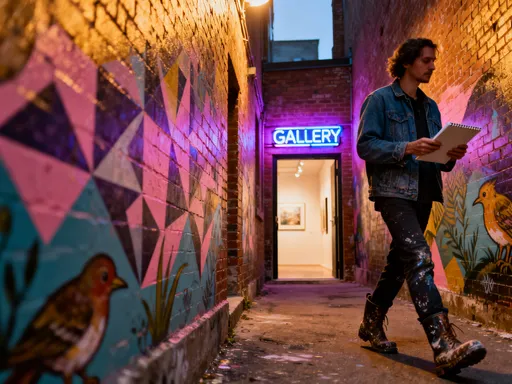
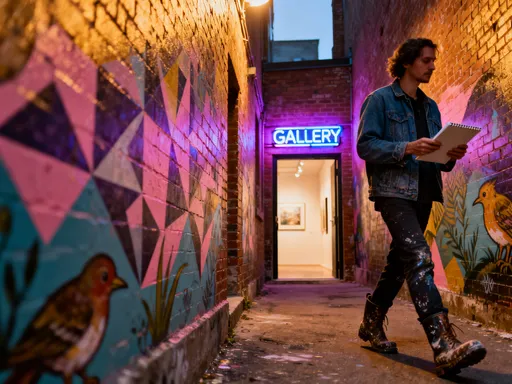
Elsewhere, I discovered a community art project on the side of an old government building—a vibrant mural depicting Chamorro legends, native plants, and scenes of daily life. It was painted by local students under the guidance of a cultural educator. No plaque explained it, no tour guide mentioned it, but it spoke volumes. Art here is not for galleries, but for the people, a way of reclaiming space and identity.
These encounters—simple, unplanned, human—are what make Agaña unforgettable. They don’t come from checking off attractions, but from being open to connection. A smile, a question, a shared silence on a bench can open a door to a story, a memory, a piece of Guam’s soul. The city teaches a different kind of travel—one that values presence over productivity, listening over photographing, and relationship over itinerary.
Practical Insights for a Meaningful Visit
Visiting Agaña requires a shift in mindset. This is not a destination for ticking boxes or chasing landmarks. It is a place to slow down, observe, and engage with respect. The best time to visit is in the early morning or late afternoon, when the heat is gentle and the city feels most alive. Weekends offer a special rhythm—church services, family gatherings, and local markets bring out the community in full force.
Getting around is manageable on foot if you stick to the central area, but a car is helpful for reaching nearby sites like the Latte Stone Park or the Fort Nuestra Señora de la Soledad. Public transportation exists but is limited, so plan accordingly. When walking, be mindful of traffic and wear comfortable shoes—sidewalks can be uneven, and shade is not always abundant.
To truly experience Agaña, seek out local events. The Guam Museum hosts regular cultural programs, and the annual Liberation Day celebrations in July bring the city to life with parades, music, and food. But even small moments matter—a church fiesta, a neighborhood cleanup, a roadside stand selling fresh coconut—can become meaningful if approached with curiosity and humility.
Respect is key. Ask before taking photos of people, especially elders or children. Learn a few basic Chamorro phrases—"Håfa adai" for hello, "Si Yu'us ma'åse" for thank you—and use them. Support local businesses: buy from family-run stores, eat at neighborhood eateries, and purchase handmade crafts directly from artisans. Avoid treating the city as a backdrop for your vacation. Instead, see it as a living community with its own rhythms, values, and history.
Consider pairing your visit with nearby villages like Humåtak (Umatac), where Magellan first landed, or Inalåhan, known for its agricultural roots and strong cultural preservation. These places, when seen together, offer a fuller picture of Guam—not as a resort, but as a homeland.
Why Agaña Changes How You See Guam
Leaving Agaña, I realized something had shifted. My view of Guam was no longer framed by postcard images of turquoise water and palm trees, but by the faces, flavors, and rhythms of its people. The island was no longer just a destination, but a story—one of resilience, adaptation, and quiet pride. Agaña doesn’t shout its significance. It whispers it, in the chime of church bells, the scent of frangipani, the warmth of a shared meal.
Most travel today is designed for convenience and comfort, but Agaña offers something rarer: depth. It asks you to step off the beaten path, not for the sake of adventure, but for understanding. It challenges the idea that value comes from luxury or novelty, reminding us that the richest experiences are often the simplest—listening to an elder’s story, tasting food made with love, watching children dance in the shade of a banyan tree.
In a world where places are increasingly shaped by tourism, Agaña stands as a quiet act of resistance—a city that refuses to perform, that insists on being itself. To visit it is not just to see Guam, but to feel it. And in that feeling, you may find a deeper truth about travel itself: that the most meaningful journeys are not about where you go, but how you arrive—with curiosity, with respect, and with an open heart.
So come to Agaña not to escape, but to connect. Walk its streets not as a spectator, but as a guest. Let the city unfold at its own pace, and you may discover that the magic was never in the sights, but in the soul.