Lost in the Wild Beauty of Karlovy Vary’s Hidden Valleys
You know what? Karlovy Vary isn’t just about fancy spas and tourist-filled colonnades. I stumbled upon something most travelers miss — wild forests, steaming springs tucked in the hills, and silence so deep it feels like another world. This is nature, raw and untouched, right in the heart of the Czech Republic. If you're craving real escape, not just photo ops, you gotta check this out. Beyond the polished marble and ornate fountains lies a quieter, older version of this famed spa town — one shaped by volcanic forces, centuries of forest growth, and a landscape that breathes with geothermal energy. Here, trails wind through misty ravines, hidden springs bubble in solitude, and the air carries the faint scent of minerals rising from deep within the Earth. For those willing to step beyond the postcard-perfect plazas, Karlovy Vary reveals a wilder soul — one that rewards curiosity with stillness, beauty, and a deeper connection to nature.
Beyond the Postcard: A Different Side of Karlovy Vary
Karlovy Vary is world-renowned for its elegant colonnades, historic spa hotels, and the ritual of sipping mineral water from ornate fountains along the Teplá River. Millions visit each year to walk the promenades, take therapeutic baths, and enjoy the refined charm of this centuries-old resort town. Yet, just a short walk from the bustling center, the city’s polished surface gives way to something far more primal. Beyond the manicured gardens and cobblestone paths, the terrain rises into forested slopes and narrow valleys carved by water and time. This natural landscape, often overlooked by tourists, is not merely a backdrop — it is the source of Karlovy Vary’s very identity.
The region’s geology is what makes it extraordinary. Situated in the western part of the Czech Republic, Karlovy Vary lies within the Bohemian Massif, a vast geological formation shaped by ancient volcanic activity. Deep beneath the surface, groundwater is heated by residual geothermal energy, then forced upward through fault lines, emerging as hot mineral springs. While the town channels these waters into public outlets, the same forces shape the surrounding wilderness. Steam vents, warm seeps, and mineral-rich streams appear unexpectedly along forest trails, evidence of the Earth’s quiet but constant movement.
This duality — between the curated spa experience and the untamed natural world — is what makes Karlovy Vary so unique. The town celebrates its thermal waters with grandeur and tradition, but the forests preserve them in silence. Here, there are no crowds, no chandeliers, no glass bottles for sale — only moss-covered rocks, rustling leaves, and the occasional hiss of rising steam. For travelers seeking more than a checklist of landmarks, this hidden realm offers a chance to witness the origins of Karlovy Vary’s healing reputation, not as a spectacle, but as a living, breathing ecosystem.
The Magic of the Teplá River Gorge: Where Earth Breathes
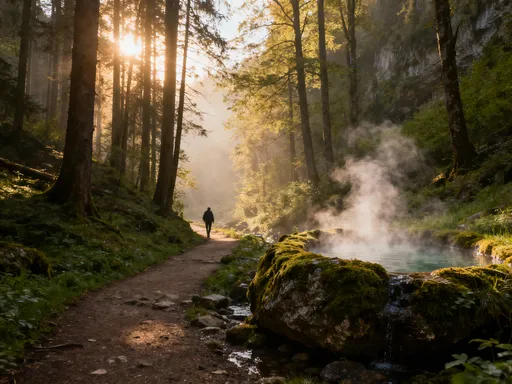
One of the most captivating natural features near Karlovy Vary is the Teplá River Gorge, a narrow valley where the river has cut through layers of metamorphic rock over thousands of years. As you descend into the gorge, the atmosphere shifts. The air grows cooler, yet carries a faint warmth from below. Mist rises in patches from cracks in the stone, and the scent of sulfur — subtle but unmistakable — lingers in the breeze. This is not just a scenic walk; it is a journey into a geologically active zone where the Earth still speaks.
Scattered along the riverbed and its banks are small fumaroles — openings in the ground from which warm, mineral-laden water and steam escape. These are not dramatic geysers, but quiet exhalations of the planet’s inner heat. Some form tiny pools that shimmer with condensation, while others release a steady plume of vapor that curls upward before dissolving into the forest canopy. The sound is equally enchanting: a soft bubbling underfoot, the occasional drip from wet rock, and the constant murmur of the river flowing over smooth stones.
Walking through the gorge feels like stepping into a forgotten world. Sunlight filters through the trees in broken beams, illuminating patches of moss and ferns that thrive in the humid air. The trail, though well-marked in places, often narrows to a single path flanked by steep walls of rock. In spring and early summer, the moisture supports a lush understory — liverworts cling to boulders, and delicate maidenhair ferns unfurl in sheltered crevices. It’s easy to understand why locals once believed these valleys were inhabited by spirits — the land feels alive, breathing, watching.
What makes the Teplá River Gorge truly special is its relative obscurity. Unlike the main spring sites in town, this area sees few visitors. There are no souvenir stands, no guided tours, and no loudspeakers announcing historical facts. The experience is intimate, personal, and deeply sensory. It invites slowness — a pause to listen, to touch the warm stone, to fill a bottle with water that has traveled deep beneath the Earth. This is not tourism as performance; it is nature as revelation.
Hiking the Diana Lookout Trail: Forest Paths to Skyline Views
Rising above Karlovy Vary like a sentinel, the Diana Observation Tower is one of the region’s most iconic vantage points. Most visitors reach it by car or shuttle, stepping out onto the viewing platform with little effort. But the true magic lies in the journey — the Diana Lookout Trail, a forest path that winds uphill through beech and spruce woods, offering a gradual immersion into the wilderness. This trail is not just a route to a destination; it is an experience in itself, rich with light, sound, and the rhythm of steady footsteps on earth and stone.
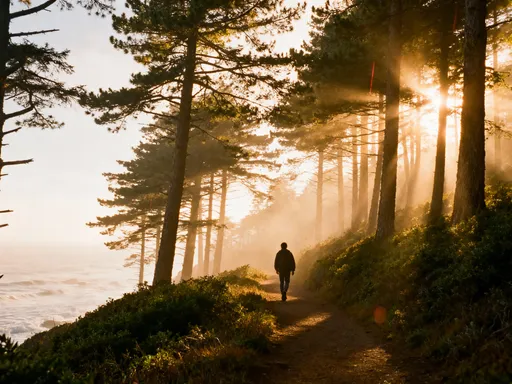
The trail begins near the edge of town, where the urban sounds fade and the forest closes in. The path is well-maintained but natural — a mix of packed dirt, tree roots, and occasional stone steps. As you climb, the canopy thickens, and sunlight filters through in dappled patterns that shift with the wind. Birdsong is constant — the call of the European robin, the rhythmic tapping of a woodpecker, the distant whistle of a thrush. In autumn, the beech leaves turn golden, carpeting the ground in a soft, rustling layer. In spring, the air is fresh with the scent of damp soil and new growth.
What makes this hike accessible yet rewarding is its pacing. The incline is steady but manageable, suitable for hikers of moderate fitness. Along the way, small clearings appear unexpectedly, offering glimpses of the valley below — the winding Teplá River, the red rooftops of Karlovy Vary, and the surrounding hills blanketed in green. These moments of openness contrast beautifully with the enclosed, almost cathedral-like feel of the forest interior.
Reaching the Diana Tower feels like a quiet triumph. From its balcony, the panorama stretches for miles — a patchwork of forest, river, and distant villages. But many who make the full hike find that the view from the tower, while impressive, is not the highlight. It’s the stillness of a mid-trail rest on a mossy log, the sudden appearance of a red squirrel darting across the path, or the cool mist rising from a shaded ravine that lingers in memory. For those seeking mindfulness in motion, this trail offers a perfect balance of effort and reward.
Hidden Springs: Drinking Nature Straight from the Source
While the main mineral springs in Karlovy Vary are carefully managed and heavily visited, the surrounding hills hide dozens of smaller, unnamed outlets where mineral water emerges naturally from the ground. These hidden springs are not marked on official maps, but they are known to locals and regular visitors who practice *lúčení* — the traditional Czech custom of slow, intentional spring-hopping, often done for wellness and reflection. To drink from these wild sources is to participate in a quiet ritual that connects body, landscape, and tradition.
Finding these springs requires attention. They appear as damp patches on the trail, small stone basins built into the hillside, or metal spouts emerging from the roots of trees. Some flow continuously, while others seep gently, forming shallow pools that glisten in the sunlight. The water varies in temperature — some are warm to the touch, others cool but still carrying the distinct mineral tang. Each spring has its own character, shaped by the minerals it picks up underground: iron, calcium, magnesium, and trace elements that give the water a slightly metallic or earthy taste.
Drinking directly from these sources is safe, provided the spring is active and flowing. Stagnant water should always be avoided. Many hikers carry reusable glass or metal bottles to collect water, allowing them to taste the differences between springs. Some are mildly effervescent, others smooth and soft. The experience is deeply sensory — the coolness of the water, the faint fizz on the tongue, the quiet satisfaction of drinking from the land itself.
*Lúčení* is more than hydration; it is a practice of presence. Locals often walk slowly from spring to spring, pausing to rest, reflect, and appreciate the forest. There is no rush, no checklist — just the rhythm of walking and drinking, breathing and being. For visitors, adopting this pace can transform a simple hike into a restorative journey. It’s a reminder that wellness is not always found in luxury spas, but sometimes in the simple act of stopping to drink from a stream that has flowed for centuries.
Flora and Fauna in the Karlovy Vary Wilds: Life in the Mist
The forests surrounding Karlovy Vary support a rich and delicate ecosystem, shaped by the region’s unique microclimate. The constant presence of moisture — from river fog, rainfall, and geothermal seepage — creates ideal conditions for mosses, lichens, and shade-loving plants. Tree trunks are draped in thick green cushions of moss, and fallen logs disappear beneath layers of ferns and fungi. This is a world of quiet abundance, where life thrives in the damp and the dim.
Among the most striking features are the ferns. Species such as the common male fern and the delicate lady fern flourish in the shaded understory, their fronds unfurling in spring like green scrolls. In more secluded ravines, you may find the rarer ostrich fern, which grows in symmetrical plumes and prefers consistently moist soil. These plants are not just beautiful — they are indicators of a healthy, undisturbed forest. Their presence signals clean air, stable humidity, and minimal human disruption.
The animal life here is more elusive but no less present. Red deer roam the higher slopes, their tracks sometimes visible in soft mud after rain. Roe deer are more commonly seen at dawn or dusk, slipping silently between trees. Birdlife is abundant — the great spotted woodpecker drums on dead trunks, the Eurasian jay flashes blue through the canopy, and the black woodpecker, one of Europe’s largest, can occasionally be heard with its loud, ringing call. Smaller creatures like hedgehogs, dormice, and bats inhabit the forest, playing quiet but vital roles in the ecosystem.
What makes this wildlife experience special is not necessarily sighting an animal, but sensing its presence. A snapped twig, a rustle in the leaves, a feather caught on a branch — these small signs invite mindfulness. They encourage hikers to move slowly, speak softly, and observe. In a world of constant noise, the Karlovy Vary wilds offer a different kind of richness — one measured not in sights seen, but in moments of quiet connection.
Why These Natural Wonders Are Worth Protecting
As Karlovy Vary continues to attract visitors from around the world, the pressure on its natural surroundings grows. While tourism brings economic benefits, it also poses risks — trail erosion, litter, and disturbance to wildlife. Some popular paths show signs of wear, with exposed roots and compacted soil. In a few places, discarded plastic bottles and food wrappers mar the forest floor. These small impacts, multiplied by thousands of visitors, can have lasting consequences.
The preservation of Karlovy Vary’s hidden valleys is not just an environmental issue — it is a cultural one. These forests and springs are part of the region’s heritage, just as much as the grand spa buildings. They are where the town’s healing waters begin, where traditions like *lúčení* are practiced, and where people go to find peace. Losing their wild character would mean losing a vital part of what makes this place special.
Fortunately, local conservation efforts are underway. Volunteer groups organize regular clean-up hikes, and trail maintenance teams work to stabilize eroded paths with natural materials. Educational signs, written in Czech and English, remind visitors to stay on marked trails, avoid picking plants, and carry out all waste. Some areas are designated as protected zones, where access is limited to preserve sensitive habitats.
Travelers can contribute simply by practicing responsible habits. Staying on trails prevents soil erosion and protects plant life. Carrying a reusable water bottle reduces plastic waste and allows for safe spring water collection. Avoiding loud noises and sudden movements helps minimize stress on wildlife. These small choices, when made collectively, have a powerful impact. They ensure that the misty ravines, hidden springs, and quiet forests of Karlovy Vary remain intact for future generations — not as exhibits, but as living, breathing wilderness.
Planning Your Off-the-Beaten-Path Adventure: Practical Guide
Exploring the wild side of Karlovy Vary is accessible and rewarding, but a little preparation goes a long way. The best way to begin is by starting early in the morning, when trails are quiet and the forest is at its most serene. From the town center, the Diana Lookout Trail can be reached on foot in about 15 minutes. Other trailheads, such as those leading into the Teplá River Gorge, are within a 20-minute walk or a short bus ride.
Footwear is essential. While some paths are well-maintained, others can be muddy, rocky, or slippery, especially after rain. Sturdy hiking shoes with good grip are recommended. A light backpack with water (even if you plan to refill from springs), a small snack, a map or offline GPS app, and a rain jacket will cover most needs. In cooler months, layers are key — the forest can be several degrees colder than the town.
Seasonal timing affects the experience. Spring brings fresh greenery and flowing streams, while summer offers lush shade but more insects. Autumn is particularly beautiful, with golden foliage and crisp air, though fog can reduce visibility. Winter hikes are possible but require extra caution due to ice; some trails may be closed or unmaintained during heavy snow.
For those arriving from Prague, the journey is straightforward. Direct trains run from Prague’s main station to Karlovy Vary, taking about two and a half hours. The train station is centrally located, making it easy to reach the town and trailheads on foot. Buses are also available, though less frequent. Once in Karlovy Vary, public transport and walking are sufficient for most nature excursions — there’s no need for a car.
A balanced itinerary might include a morning in the town, visiting one of the main spas or enjoying a traditional breakfast, followed by a midday hike into the hills. Return in the late afternoon for a quiet dinner and perhaps a gentle walk along the river. This rhythm allows for both cultural immersion and deep nature connection — the best of both worlds.
Finding Stillness Where Nature Whispers
The true magic of Karlovy Vary isn’t just in its grand architecture or famous waters — it’s in the quiet moments between trees, where steam curls from the earth and the world feels untouched. By stepping off the main path, travelers don’t just see more — they feel more. This journey isn’t about ticking boxes; it’s about reconnecting with the pulse of the wild. And sometimes, that’s exactly what we need.
In a time when life moves fast and screens dominate attention, the hidden valleys of Karlovy Vary offer a rare gift: stillness. They invite us to slow down, to listen to the bubbling of a spring, to watch mist rise from a ravine, to walk without urgency. Here, wellness is not a product to be purchased, but a state to be discovered — in the rhythm of breath, the touch of moss, the warmth of stone.
These forests and springs are not just natural features; they are sanctuaries. They remind us that beauty does not always shout — sometimes, it whispers. And if we learn to listen, we may find that the wild places within us stir in response. So the next time you visit Karlovy Vary, don’t just admire it from the promenade. Step into the woods. Follow the steam. Drink from the source. Let the silence speak. Because in the end, the most unforgettable journeys are not the ones that take us far from home — but the ones that bring us back to ourselves.